A Life in Song
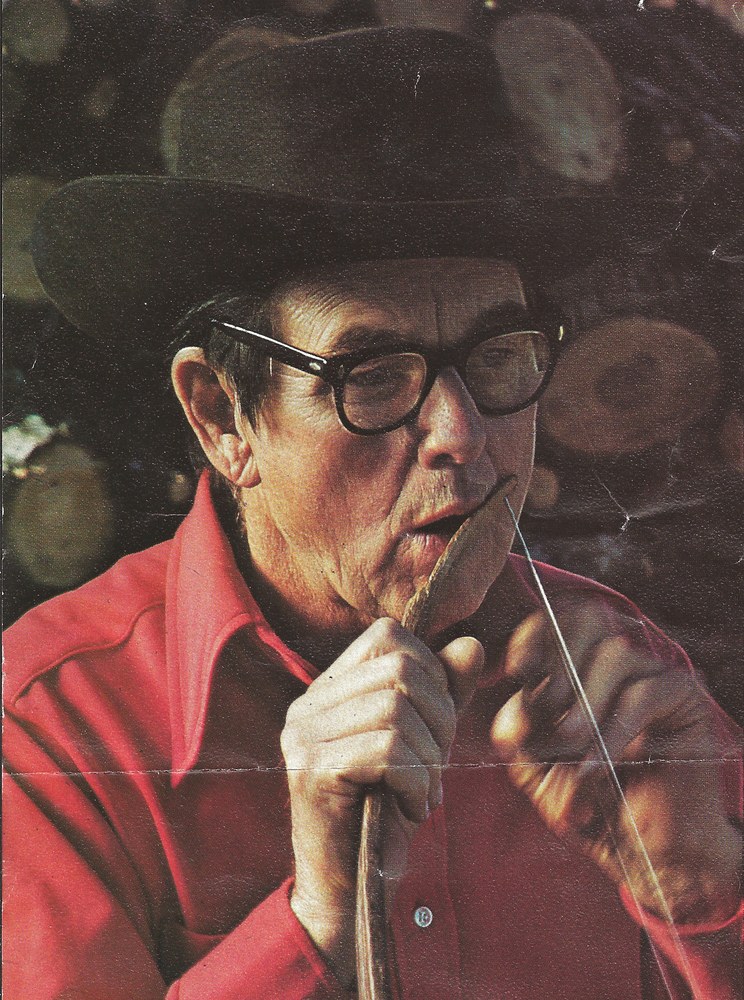
Born James Corbitt Morris in rural Arkansas in 1907, Jimmy Driftwood (sometimes called Jimmie) grew up working on his family's farm in the Ozarks. He became a schoolteacher at just sixteen years old and began writing songs, poems, and plays to help his students learn — long before his music reached a national audience.
One of those classroom songs, "The Battle of New Orleans," would eventually become one of the most successful folk recordings in American history. Its success transformed Driftwood's life, taking him from rural classrooms to Carnegie Hall, the Grand Ole Opry, and concert stages across the country.
Despite his fame, Driftwood remained deeply connected to his Ozark roots, dedicating much of his later life to environmental preservation and to keeping traditional folk music alive in Mountain View, Arkansas. After leaving the Grand Ole Opry in 1962, Jimmy returned to his home in Timbo, Arkansas, and was instrumental in founding the Ozark Folk Center and in establishing Mountain View, Arkansas as the Folk Music Capital of the World. He built the Jimmy Driftwood Barn, where folk and mountain music is still played by local and visiting musicians every Friday and Sunday night.
Read more about his environmental advocacy and the founding of the Ozark Folk Center on our Legacy & Preservation page.